Nebraska Fall Gardening: Cool-Season Sowing Windows
A fall vegetable garden can provide fresh greens and roots after summer crops fade, but sowing too late leaves seedlings little time to establish. Nebraska gardeners also have to account for local weather, dry soil, and the difference between a light frost and a hard freeze. This guide shows how to choose crops, work backward from likely frost, and adjust sowing to the conditions in your own garden.
Why fall sowing needs a different calendar
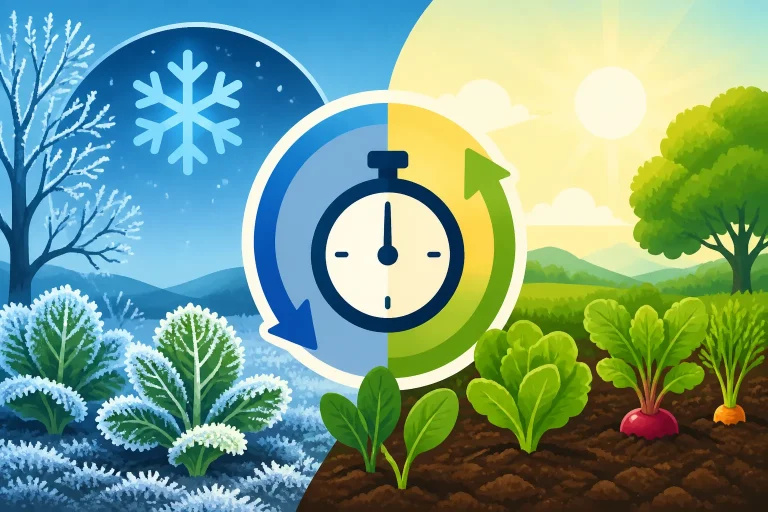
Spring planting often feels like a race to get warm-season crops started. Fall gardening is a different kind of scheduling problem: plants need enough time to germinate, grow, and reach a useful harvest before shortening days and cold weather slow them down. A seed packet’s days-to-maturity information can help, but it is only one part of the decision.
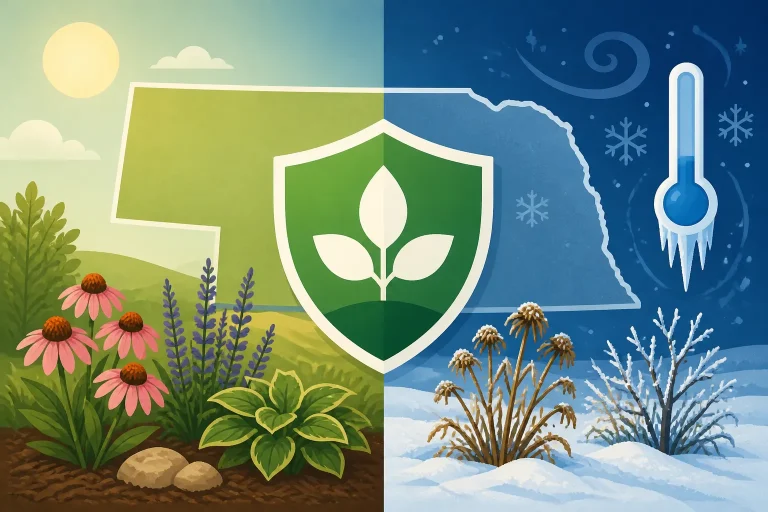
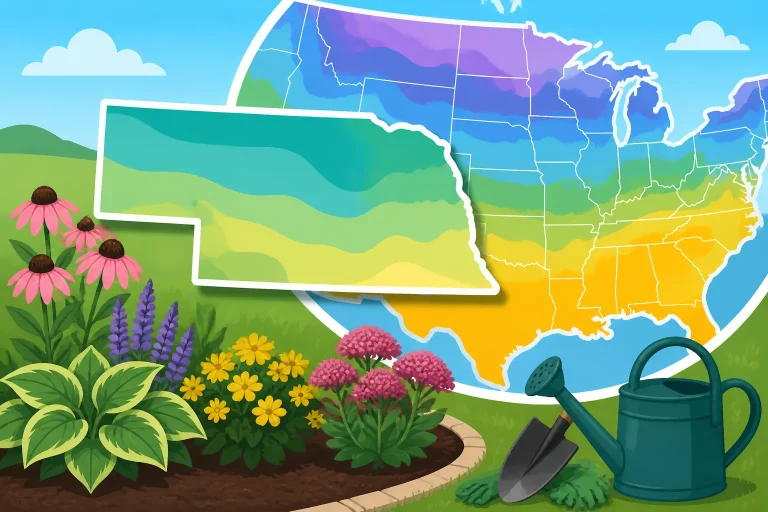
Nebraska Extension reports that Nebraska’s frost-free season has increased by 1-2 weeks since 1991. That broad change does not guarantee a longer fall in a particular yard or predict the first frost in a particular year. Local conditions still matter. A low spot, exposed garden, sheltered courtyard, or west-facing bed may experience a different mix of wind, cold air, and lingering warmth.
Fall sowing also starts under different soil conditions from spring sowing. Garden beds may be warm and dry after summer heat. A seedbed that looks workable on top can be too dry beneath the surface, where a newly germinated root needs moisture. Conversely, heavy soil can become compacted if it is worked while wet. Preparing the bed and watering consistently are therefore part of choosing the sowing window, not chores to put off until after seeds are in the ground.
The goal is not to predict an exact frost date. Frost dates describe probabilities, and weather varies from year to year. Instead, use a local forecast or frost-date resource as a planning reference, then leave room for uncertainty. The closer a crop is to maturity, the more useful it is to protect it from brief cold spells. A seedling that has only just emerged has less ability to recover from a late start or a dry spell than a well-established plant.
Think about what you want from the bed, too. Some gardeners want a quick harvest of baby greens before cold weather. Others want roots that can grow for longer, or plants that will produce repeatedly while the weather stays cool. Those goals call for different crops and sowing decisions. Fall Vegetables in Nebraska: Timing Before First Frost offers more detail on planning harvests around the season’s changing conditions.
Choose crops by cold tolerance and harvest purpose
Cool-season crops are not all interchangeable. Some germinate readily in warm soil and provide a quick harvest; others take longer to develop and are more sensitive to heat or drought during establishment. Choosing crops by how they grow—and what you want to eat—makes the calendar more useful than a single generic planting list.
Quick crops and baby leaves
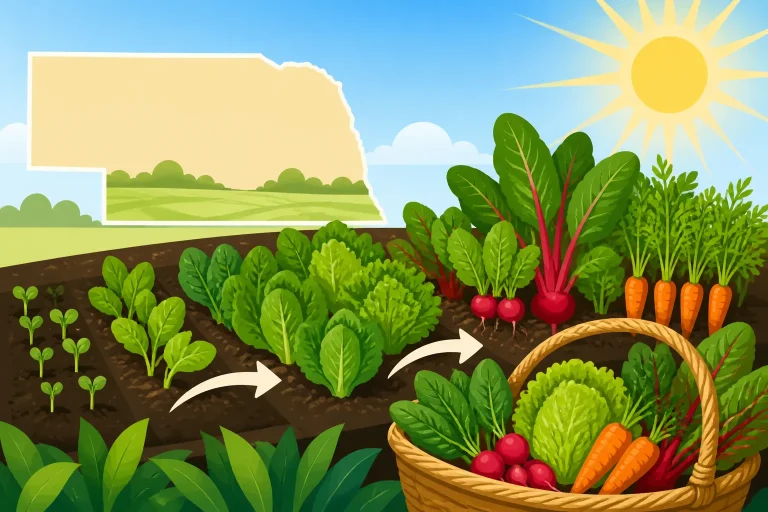
Radishes and leafy greens can suit a short fall window, especially when harvested young. Lettuce, spinach, and other greens can be picked as small leaves or allowed to grow larger if conditions permit. Baby-leaf harvesting can be a practical choice when you are unsure how much time remains: you can begin picking while plants are still small rather than waiting for a full-size head or mature plant.
The trade-off is that tender leaves can be damaged by cold, drying wind, or a sudden temperature swing. A row cover or other appropriate protection may help extend picking, but it does not make the crop immune to freezing. Choose a sheltered bed if you have one, and check plants regularly as temperatures drop.
Roots and crops that need a longer runway
Carrots, beets, turnips, and similar root crops need enough time to develop the size and texture you want. A small root may still be usable, but the crop can disappoint if sowing is delayed and cold weather arrives before roots have filled out. Check the seed packet’s maturity information and consider whether you are aiming for baby roots or a larger harvest.
Root crops are especially dependent on a loose, evenly moist seedbed. Crusted or cloddy soil can interfere with emergence, while drying near the surface can leave seeds unable to establish. Thin seedlings as needed so the remaining plants have room to grow. If the bed is compacted or difficult to prepare, it may be worth choosing leafy crops that can be harvested young rather than expecting large roots from poor conditions.
Brassicas and transplants
Crops such as broccoli, cabbage, and kale can be grown from transplants or started from seed, depending on the crop and the time available. Transplants begin with a head start, but they still need to settle into the bed and grow. Seedlings that are stressed by heat, dry soil, or transplant shock may lose time rather than gain it.
When selecting transplants, look for healthy plants with sturdy stems and no obvious signs of stress. Set them into moist soil and water them in carefully. Protect new transplants from drying wind and intense afternoon sun while they establish, especially if the weather remains summerlike. Follow the crop’s growing instructions and local recommendations for the type of plant you are growing.
Garlic belongs in a different part of the plan
Garlic is a fall planting, but it is not a quick fall salad crop. Its planting is intended to establish the crop for growth and harvest in a later season. University of Nebraska—Lincoln Extension recommends that gardeners plant garlic in the fall. For details on choosing a site, preparing cloves, and caring for the crop, see Planting Garlic in Nebraska for an Early Summer Crop.
Use seed descriptions as a starting point
Seed packets and transplant labels can help you compare crops, but their maturity estimates do not guarantee a particular harvest date in your garden. Growing conditions, seedbed moisture, light, plant stress, and the way a crop is harvested all affect the result. Treat the listed maturity information as a planning aid, not a promise.
If you are buying seed, Botanical Interests is one possible source. Compare the crop description and growing instructions with the conditions in your bed, and check the packet for any information that applies to the specific seed. The best choice is not necessarily the crop with the shortest maturity estimate; it is the crop you can establish in suitable conditions and harvest in the way you want.
| Crop or crop group | A useful fall-garden role | Main planning consideration |
|---|---|---|
| Radishes | Quick roots or repeated small harvests | Keep the seedbed evenly moist and harvest before roots become overgrown |
| Lettuce and spinach | Baby leaves or larger greens | Protect tender foliage from drying wind and cold |
| Carrots and beets | Roots for fresh use or storage | Prepare loose soil and allow enough time for roots to develop |
| Turnips | Roots and, for suitable types, greens | Decide whether you want leaves, roots, or both |
| Broccoli, cabbage, and kale | Larger plants and leafy harvests | Transplants need time to settle and resume growth |
| Garlic | A crop planted in fall for a later harvest | Follow crop-specific planting and care guidance |
Work backward from likely frost without treating it as a deadline
A practical sowing window starts with the harvest you want and works backward. Begin with a local estimate of when frost is likely, then consider how much time your chosen crop needs to produce. Use the crop’s maturity information as a guide and allow for the fact that fall growth can slow as daylight shortens and temperatures cool.
This approach is more useful than copying a single calendar date from a different Nebraska town. Conditions can differ across the state and within a neighborhood. The weather station or local frost information you consult may not represent the exact conditions in your garden, particularly if your yard has a low hollow, a slope, a windbreak, or a heat-retaining wall. How Nebraska Freeze Dates Vary Across Regions and Picking Nebraska NOAA Weather Stations for Reliable Local Frost Dates can help you understand why local context matters.
Start with the crop’s expected harvest
Decide whether you want full-size roots, mature heads, or small leaves. A crop harvested young may fit a shorter window than one grown to full size. Then check the packet or growing information for the crop’s maturity needs. If the time available appears tight, select a quicker crop, plan to harvest young, or move the sowing earlier if bed conditions allow.
This is where fall gardening involves a real trade-off. Planting early can give crops more time, but some cool-season seeds may struggle in very hot, dry soil. Waiting for milder weather can improve conditions for germination, but it also leaves less time before growth slows. The best choice depends on the crop, the state of the bed, and the weather pattern rather than a universal date.
Account for establishment, not just maturity
Maturity information generally describes crop development under growing conditions; it does not mean a seedling will grow at the same pace every day. A seed that sits in dry soil is not making useful progress. A transplant that wilts and stalls after planting may need time to recover. If the bed is too hot, too dry, or too compacted, the crop can lose time before it is established.
When planning, think of the crop’s early stage as part of its schedule. A seed must take up water, germinate, and produce a healthy seedling before it can build toward harvest. Transplants need to resume active growth after being moved. Make the bed ready, have water available, and protect the planting from unnecessary stress so the crop can use the time it has.
Treat frost information as a planning aid
A frost date is not a guarantee that frost will occur on that day, nor that it will not occur earlier or later. A forecast becomes more useful as the event approaches, but it still can change. Use a seasonal estimate to decide what to sow and a current forecast to decide whether to protect plants.
Different crops respond differently to cold. A light frost may mark the end of tender growth for one crop, while another can continue producing through cool weather or recover from brief exposure. A hard freeze can damage a wider range of plants. If the forecast is uncertain, prioritize protection for the crops you value most, and harvest mature produce that could be lost. Understanding Frost and Freeze Timing in Nebraska Home Gardens explains the difference between frost and freeze risk, while Garden Harvest Decisions Before a Freezing Night helps with decisions when cold weather is close.
Keep a second plan in reserve
A flexible fall garden can have more than one outcome. If a slower crop is running behind, harvest some of it young. If the bed becomes unsuitable for a demanding crop, sow a quicker green in the open space. If the weather turns cold early, protect plants or harvest what is ready rather than waiting for an ideal size.
For more detailed calculations based on the crop and its maturity information, see Calculating Nebraska Fall Sowing Dates From Crop Days to Maturity and How Late Can You Sow Fall Vegetables in Nebraska?. These are useful complements to local observations, not replacements for them.
Prepare the bed for reliable germination
Fall seedbeds often need attention before planting because they have been through summer heat, watering, harvest, and foot traffic. Good preparation supports quick, even emergence. It cannot eliminate weather risk, but it can prevent avoidable setbacks such as dry seed, buried seed, or seedlings struggling through a crusted surface.
Clear the bed without removing useful soil
Remove spent crops and weeds that would compete with new seedlings. If a previous plant was diseased, do not leave affected material in the bed; handle it according to local guidance. Healthy plant debris can be managed as appropriate for the garden, but avoid burying large pieces directly where they may interfere with a fine seedbed.
Try to keep soil structure intact. Turning or working soil when it is wet can compact it and create hard clods as it dries. If the soil sticks heavily to tools or forms dense clumps, wait until it is workable. A crumbly, level surface is easier to sow into than a rough bed with hollows and ridges.
If you are unsure how to prepare the site or whether amendments are needed, Nebraska Vegetable Garden Planning: Site, Soil, and Sun and Improving Nebraska Garden Soils: Testing, Amendments, and Mulch cover the broader choices involved. Avoid adding fertilizer or amendments by guesswork; follow relevant product instructions and local soil guidance.
Restore moisture before sowing
Summer soil can be dry below the surface even after a light sprinkling. Check the bed beyond the top layer before sowing. If the soil is dry, water it and allow moisture to soak in rather than immediately placing seed into powder-dry ground. The aim is a seedbed that is moist but not saturated.
After sowing, the surface layer needs to stay moist until seeds germinate. This can require more attentive watering than an established garden bed because small seeds are shallow and vulnerable to drying. A gentle spray or fine watering pattern helps avoid washing seeds out of place. Check the soil itself rather than relying only on the appearance of the surface; the top can dry quickly while the root zone remains damp, or look dark while the seed layer underneath is dry.
Watering practices should reflect soil type, exposure, wind, and recent rainfall. Sandy soil may dry more quickly than heavier soil, while poorly drained ground can stay wet long enough to harm roots. For practical moisture checks and watering decisions, see Trowel Tests: Checking Garden Moisture Around Roots After Rain and Watering Garden Beds Through a Prolonged Nebraska Drought.
Make a fine seedbed for small seeds
Small seeds need contact with moist soil, but they should not be buried more deeply than the crop instructions recommend. Break up large clods and level the surface before sowing. Follow the packet’s planting-depth guidance for the crop rather than using one depth for every seed.
Mark rows or planting areas so you can distinguish new seedlings from weeds. This is especially helpful when sowing greens, which can look similar to unwanted seedlings at first. Water gently after sowing, then keep the seed zone from drying. If a crust forms, seedlings may struggle to emerge; avoiding heavy watering and rough surface disturbance can help maintain a friable bed.
Make room for the new crop
Where a summer crop has finished, clear the area and prepare it for the fall planting. Where summer plants are still producing, decide whether they are worth keeping. A productive tomato or squash plant may occupy space that could support a fall crop, but removing a healthy plant too early can also mean giving up food still on the way. Make the decision based on the plant’s condition, the space available, and the time remaining for the fall crop.
Raised beds, containers, and in-ground plots can all work, but they behave differently. Containers may warm and dry more quickly than garden soil, and small containers can be especially demanding to keep evenly moist. In-ground beds may hold moisture longer but can be slower to drain. Choose the setup you can monitor and water consistently. Raised Beds vs In-Ground Vegetable Beds for Nebraska Yards discusses those differences in more detail.
Sow, establish, and manage seedlings in changing weather
Once a crop is selected and the bed is ready, focus on getting a uniform stand of healthy plants. Fall seedlings often have to establish during changeable weather: hot afternoons may persist while nights begin to cool, and dry wind can undo careful watering. Frequent observation helps you respond before small problems become a failed planting.
Sow at the depth and spacing the crop needs
Follow the packet or crop-specific instructions for sowing depth and spacing. Avoid scattering seed thickly just to ensure emergence; crowded seedlings compete for light, moisture, and room. If you do sow densely, thin seedlings when the crop and instructions call for it. Thinning can feel wasteful, but it gives the remaining plants a better chance to develop.
For crops grown in rows, make a shallow furrow at the recommended depth, sow evenly, cover gently, and water without displacing seed. For broadcast sowing, distribute seed as evenly as possible and cover as directed. Keep track of what was planted in each section. A simple garden note can record the crop, sowing conditions, and where the row is located without relying on memory.
Help seedlings through summerlike heat
Fall planting can begin while daytime weather still feels like summer. Warm, exposed soil may dry quickly, and newly emerged seedlings have limited roots. Water the bed gently when needed and pay particular attention after wind or hot weather. A temporary shade cloth or similar protection may reduce stress in an exposed location, but it should not prevent adequate light or airflow.
Do not assume that watering more is always better. Saturated soil can limit oxygen around roots and encourage problems, while shallow, frequent surface wetting may leave deeper soil dry. Check moisture near the roots, and adjust based on what you find. Container crops deserve close attention because their limited soil volume can change quickly.
Use transplants thoughtfully
Transplants can be useful when a crop needs more time than direct seeding allows, but the transition from nursery conditions to an open bed can be stressful. Water plants before setting them out if they are dry, handle root balls carefully, and plant into soil that is already moist. Firm soil gently around the roots to remove large air gaps without packing it hard.
After planting, monitor for wilting and drying. Some drooping during a hot afternoon may improve as conditions cool, but persistent wilting can indicate that roots are not taking up enough water. Protect the plants from harsh exposure while they settle in. Avoid assuming a transplant is established simply because it remains upright; look for signs of continued new growth.
Use covers with care
Row covers and other garden covers can provide a buffer against wind and some cold exposure, depending on the material and conditions. They are not a guarantee against a hard freeze. Secure covers so wind cannot lift them, and check that plants have room beneath them. A cover that presses against tender foliage may not provide the protection you intended.
Covers can also trap heat on mild or sunny days. Ventilate or remove protection when conditions make the covered space too warm, and replace it when needed. For practical details on extending fall production, see Protecting Fall Crops From Freezing Temperatures in Nebraska. If you use a cover in windy conditions, Weighing Down Row Covers Against Strong Nebraska Gusts addresses securing it.
Keep sowing decisions flexible
A single planting date is not the only way to manage the bed. Some gardeners sow small areas at different times to spread out harvest, rather than having all the greens or roots reach a usable stage together. This can reduce the risk of a glut and give you options if the first sowing germinates unevenly.
A staggered approach works best when you have enough space and can keep each planting watered. It is less useful if later sowings would have too little time to grow or if the bed is difficult to access. Nebraska Succession Planting: Steady Harvests All Summer and Interval Seeding for Continuous Greens and Root Crops in Nebraska offer more on spreading out sowing and harvest.
Protect the harvest as temperatures fall
Cold protection is most effective when it is planned before a cold night arrives. Keep an eye on local forecasts, know which crops are most vulnerable, and decide in advance what you will cover or harvest. A last-minute cover may help in some situations, but it can fail if it is poorly secured, too small, or left in place when daytime conditions turn warm.
Understand what the forecast means for the garden
Forecast temperatures describe conditions at a measurement location, not necessarily the temperature at every plant. Cold air can settle in low places, while walls, fences, and sheltered areas may change how quickly a bed loses heat. Wind, cloud cover, and the condition of the soil can also affect the garden’s exposure.
A forecast calling for cold weather should prompt a practical check: what is growing, what is nearly ready, and what can be protected? Do not wait for every crop to reach a perfect size if a freeze threatens. Harvest mature produce that is likely to be damaged, cover crops that can continue producing, and accept that some plants may be lost.
Match protection to the crop and situation
A cover can reduce exposure to light frost, but its effectiveness depends on the material, the way it is installed, and the severity of the cold. Keep the cover from resting heavily on delicate leaves when possible, secure the edges against wind, and make sure the material can be removed or vented when conditions warm.
Watering the soil before a cold night is not a universal fix. The right approach depends on soil moisture, drainage, weather, and the type of plants involved. Avoid creating waterlogged conditions in an effort to protect plants. Follow reliable local guidance for the specific forecast and crop.
Cold tolerance is not identical across vegetables. A leafy crop may tolerate cool weather but still suffer when a hard freeze occurs. A root may be protected partly by the soil but still lose quality or be difficult to harvest if the ground freezes deeply. Consider the edible portion, plant stage, and likely weather before deciding whether to leave a crop in place.
Harvest at a useful stage
Harvest is part of frost planning. Pick leafy crops when they are the size you want, and collect roots that are mature enough for use before a prolonged freeze makes them difficult to dig. Some crops may continue growing under protection, but waiting for a larger harvest always carries some risk when cold weather is approaching.
Handle produce gently and remove damaged or diseased material. If you want to store roots or other vegetables, follow crop-specific curing and storage guidance rather than assuming all fall produce can be stored the same way. Timing Fall Root Crop Harvests Before Deep Ground Freezes and Curing and Storing Onions, Sweet Potatoes, and Pumpkins cover related harvest decisions.
Avoid overreacting to a brief forecast change
Forecasts shift, and one cold night does not necessarily end the garden. If plants are not damaged and the weather moderates, they may continue to grow. Check the plants after cold weather rather than removing them immediately. At the same time, do not treat a warm stretch as proof that the season’s cold risk has passed.
Keep a record of what survived, what was damaged, and which protection methods were manageable. That information can guide the next fall garden. A sheltered bed may support tender greens longer; a windy plot may be better suited to sturdier crops or earlier harvest. Your observations are most useful when tied to the crop, location, and conditions rather than treated as a universal planting rule.
Common fall-sowing problems and practical fixes
Even a well-planned fall garden may have uneven emergence or disappointing growth. Diagnose the conditions before resowing or changing the whole bed. Seeds can fail for different reasons, and adding more seed without correcting the cause may repeat the same problem.
Seeds do not emerge
Check moisture first. If the seed layer dried out after sowing, seeds may not have germinated or seedlings may have died before reaching the surface. If the soil is crusted or compacted, emergence may be difficult. Seeds may also have been placed too deeply or displaced by heavy watering.
Carefully inspect a small area to see whether seeds are still present and whether they show signs of germination. If the bed is dry, restore moisture gently. If the surface is hard, avoid damaging any seedlings that are already emerging. Resow only after correcting the likely cause and confirming that the crop still has a reasonable opportunity to grow.
Seedlings emerge but stall
Stalled seedlings may be reacting to heat, inconsistent moisture, poor soil contact, crowding, or transplant stress. Check the root zone rather than watering on a fixed routine. Look for signs of insects or disease if plants are damaged, but do not assume every poor seedling is a pest problem.
Thin crowded plants as appropriate, and give transplants time to establish while protecting them from harsh conditions. If the bed is too exposed, consider whether a more sheltered spot or a different crop would be a better fit. A crop suited to a short, uncertain window is often a more reliable choice than trying to force a slow crop through poor conditions.
Plants grow well but seem behind
Cooler temperatures and shorter days can slow growth, and fall conditions may not match the assumptions behind a maturity estimate. If the crop is edible when young, begin harvesting at a smaller stage. If a larger harvest is important, protect the plants where practical and monitor the forecast.
Avoid adding fertilizer automatically when a crop seems slow. The problem may be temperature, light, water, root damage, or soil condition rather than a nutrient shortage. Follow soil-testing recommendations and product labels for any fertilizer use. For broader guidance on interpreting soil needs, see Managing Soil Health and Nutrients in Nebraska Home Landscapes.
The bed dries too quickly
Wind, sun, loose soil, and container size can all contribute to rapid drying. Check moisture near the roots, water gently, and consider a suitable mulch around established plants if it will not interfere with seedlings. Keep mulch away from tiny seedlings where it would block light or prevent emergence.
If the bed is difficult to keep moist, prioritize a smaller planting that you can care for consistently. A large sowing that cannot be watered well may be less productive than a modest row in a manageable location. For newly sown seed, pay particular attention to the surface layer; for established plants, check deeper around the roots.
Frost arrives before the expected harvest
Harvest what is ready, protect crops that can benefit from a cover, and accept that immature plants may not reach their intended size. Do not rely on a cover as a guarantee through severe cold. If the forecast allows, use the remaining mild weather for a quick crop or a small follow-up sowing, but only if it has a realistic chance to establish.
The useful lesson is not simply that a crop was planted too late. Look at the whole sequence: whether seed germinated promptly, whether moisture was consistent, how quickly the crop grew, and how the garden’s location affected cold exposure. Those details help improve the next planting decision.
Frequently Asked Questions
Can fall vegetables be planted by a fixed Nebraska date?
A fixed date is a rough reference, not a reliable rule for every garden. Crop maturity, local weather, soil condition, and the garden’s exposure all affect the useful sowing window. Check local frost information and current forecasts, then adjust for your site.
Which crops are best for a short fall window?
Fast-growing leafy crops and small roots can be practical when time is limited, especially if you are willing to harvest them young. The right choice depends on the conditions in the bed and the crop’s growing instructions. A quick crop still needs adequate moisture and enough time to establish.
Should I cover fall vegetables every night?
Not automatically. Covers are useful in some cold conditions but can trap heat when the weather warms, and they are not guaranteed protection from a hard freeze. Base the decision on the forecast, crop, cover material, and how securely it can be installed.
Can a warm autumn guarantee a good late harvest?
No. A warm stretch can help crops keep growing, but weather can change, and soil moisture, daylight, and cold exposure still affect the outcome. Plan for a range of conditions and harvest crops as they become useful rather than relying on a late-season forecast.
Disclaimer
This article is for general informational purposes only and does not constitute professional advice. Laws, prices and regulations vary by location and change over time. Consult a qualified professional for guidance on your specific situation. Nebraska Gardening Guide is not a government agency and is not affiliated with any university extension, state department of agriculture or other government agency.