Does Zone 6 Winter Hardiness Protect Against Extreme Cold?
A Zone 6 label can make a Nebraska planting site look safer than it feels during a bitter cold snap. That’s because a hardiness zone describes a long-term temperature pattern, not the coldest temperature a yard will ever experience. Here’s how to use the rating when choosing plants, and what it can’t tell you about winter survival.
What a Nebraska hardiness zone actually tells you
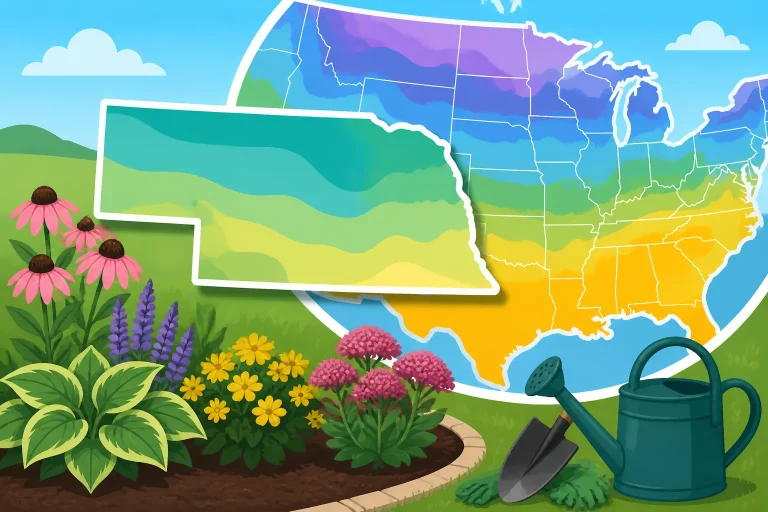
The USDA Plant Hardiness Zone Map groups locations by the pattern of their average annual extreme minimum winter temperatures over a long period. It is a useful way to compare the cold tolerance of perennial plants, especially woody plants such as trees and shrubs. It is not a forecast, a promise of protection or a complete description of a yard’s winter conditions.
A plant labeled hardy in Zone 6 is generally considered suitable for places with the winter temperature pattern represented by that zone. That does not mean the plant can withstand every cold snap in every Zone 6 location. Temperatures can fall below the usual pattern, and conditions around a plant can differ from one yard to another.
This distinction matters in Nebraska, where a broad state-level impression can hide meaningful local differences. A reading for a town or ZIP code is more useful than an assumption based on the state as a whole, but even a local map result is not a prediction for a particular garden bed. To check how map labels are assigned and interpreted, see Reading the USDA Plant Hardiness Map for Nebraska Beds and How to Find the Hardiness Zone for Your Nebraska Town.
A zone is a planning tool, not a cold-weather guarantee
Hardiness ratings help narrow the field when selecting perennial plants. If a plant’s stated hardiness is a poor match for a site, the risk of winter injury or loss may be higher. If the rating appears suitable, that is a helpful starting point, not insurance against unusual weather or challenging site conditions.
A zone does not tell you:
- The lowest temperature your yard will experience in a particular winter.
- How long a cold spell will last.
- Whether a plant will be exposed to drying wind or protected by snow.
- How quickly temperatures will change before or after a freeze.
- Whether a plant is healthy, established or properly suited to the soil and drainage.
- Whether a plant in a pot will experience the same conditions as one growing in the ground.
Those limits are why a zone should be read as one piece of a planting decision. For perennials, pair it with information about the plant’s exposure, moisture needs and tolerance for local growing conditions. Does a Warmer Nebraska Zone Guarantee Perennial Survival? explores another common misunderstanding: a warmer map label does not automatically mean a plant will thrive.
Hardiness and planting dates answer different questions
A planting calendar addresses when to sow or transplant. A hardiness zone addresses a plant’s general ability to withstand winter cold. Neither one replaces the other.
For example, a perennial may be hardy at a site but still be damaged by a poorly timed planting or by conditions that prevent roots from becoming established. A vegetable may be planted during a suitable seasonal window even though a hardiness rating is not a useful way to decide when to sow it. For a broader look at timing, see Nebraska Vegetable Planting Calendar: From Spring Thaw to Fall and Why Plant Hardiness Zones Do Not Dictate Vegetable Planting Dates.
Keep those jobs separate:
| Question | Useful planning tool | What it does not guarantee |
|---|---|---|
| Is this perennial a plausible winter-hardy choice? | The plant’s hardiness rating and a local zone check | Survival through every extreme cold event |
| When should I sow or transplant a vegetable? | A crop-specific planting calendar and current conditions | A frost-free season |
| Could my yard be colder or more exposed than nearby areas? | Observation of the site’s slope, shelter and cold-air movement | A precise minimum temperature |
| Is this plant established enough to face winter? | Its planting history, growth and condition | That it will avoid all winter injury |
The practical takeaway is simple: use a zone to screen plant choices, then consider site conditions and the risks that a map cannot show.
Why extreme cold can still damage a plant
A plant may be rated for a zone and still suffer when winter conditions are unusually severe or when several stressors occur together. The zone gives a broad measure of cold tolerance; it does not capture the full sequence of events a plant experiences.
Cold can exceed the usual pattern
A zone represents a long-term pattern, not a maximum limit. If a winter brings a colder extreme than the pattern normally suggests, even well-matched plants may be injured. The length of the cold spell can matter as well as the lowest temperature. A brief cold snap and a prolonged period of severe cold do not necessarily create the same stress.
That is one reason not to treat a zone label as an absolute cutoff. Plants near the edge of their expected hardiness are more likely to be vulnerable when conditions are unusually harsh. They may be more dependable in a sheltered location than in an exposed one, but shelter is not a guarantee. For more on the difference between a zone rating and a severe cold event, see Surviving Nebraska Bitter Cold Snaps Beyond Hardiness Ratings.
Wind and exposure can increase stress
A plant in an exposed yard may face drying winter winds that are less noticeable in a protected spot. Wind can also reduce the benefit of local shelter and remove insulating snow from the ground around a plant. A fence, building or group of trees can change the conditions at a planting site, but protection can vary by direction and season.
Look at the site from the plant’s perspective. Is it open to strong wind? Does the surrounding area offer shelter without blocking the light the plant needs? Is the plant beside a wall that may change its exposure? These observations will not tell you exactly how cold the site will get, but they can help explain why a plant struggles there while another plant nearby appears less affected.
Snow cover, soil and drainage influence winter conditions
A consistent cover of snow can insulate the ground around low-growing plants and roots. But snow is not a dependable protection strategy: it can be shallow, uneven, blown away or absent when a cold event arrives. Do not assume that a perennial will be covered simply because a nearby part of the yard usually collects snow.
Drainage matters, too. Soil that stays saturated can create problems for plants that do not tolerate wet conditions, while a site that dries out can add moisture stress. The plant’s roots experience conditions in the soil, not just the air temperature shown in a forecast. A winter-hardy label does not correct a mismatch between a plant’s moisture preferences and the place where it is growing.
A sudden change in conditions can be hard on plants
Winter does not always move in a steady direction. A stretch of milder weather followed by sharp cold can expose plants to changing conditions. Repeated warming and cooling can also affect plants differently from a stable cold period. The details vary by plant and site, so it is better to treat temperature swings as an added risk than to assume that a single hardiness rating captures them all.
For an overview of how seasonal swings affect Nebraska yards, see Managing Seasonal Temperature Extremes Across Nebraska Yards. The main point is not that every temperature change causes injury. It is that the season’s pattern, plant condition and site all matter alongside the lowest temperature.
How to judge a Zone 6 site before planting
A zone check is a useful first step, but a good planting decision starts with the actual spot. Two gardens close together can differ in wind exposure, elevation, drainage and cold-air movement. Spend time observing the area rather than relying only on a map label.
Check the local map result, then narrow the decision
Start with the map result for the town or ZIP code that best represents your area. Treat it as regional guidance rather than a measurement of your individual property. Map boundaries do not account for every small change in terrain or exposure, and a nearby label should not be taken as a guarantee that your yard will match it exactly.
Then check the plant’s stated hardiness range and its other growing requirements. A plant that is suitable for the zone may still be a poor choice for a shaded, wet, dry or windy spot if its needs do not match those conditions. Conversely, a plant with limited cold tolerance may have a better chance in a sheltered site, but choosing it still carries more risk than selecting a plant better suited to the local conditions.
Use the hardiness rating as a filter:
- Confirm the location’s zone using a relevant local result.
- Check the plant’s stated winter hardiness.
- Consider whether the plant is near the edge of its recommended conditions.
- Match the site’s light, moisture and exposure to the plant’s needs.
- Decide whether the consequences of winter loss are acceptable for that planting.
If dependable survival is the priority, avoid treating a marginal rating as a sure thing. If you are willing to accept occasional loss or replace a plant, you may decide to try one in a more protected location.
Notice low spots and cold-air movement
Cold air can collect in low areas, so a bed near a hollow or at the bottom of a slope may face different conditions from a nearby higher spot. Buildings, walls, dense plantings and other features can also affect how air moves through a yard. These differences are easy to miss if you look only at a broad map.
Observe where cold air appears to settle and where frost damage tends to show first. Pay attention to beds that stay cold after surrounding areas have started to warm. A low site is not automatically unsuitable, but a plant chosen near the edge of its hardiness may be a riskier choice there. For a closer look at this yard-level factor, see Why Cold Air Drainage Matters When Nebraska Spring Frost Threatens Beds.
A sheltered spot can be helpful, but do not assume that every wall or fence improves winter conditions. Shelter from wind, sunlight, reflected heat and moisture can interact in different ways. The right location depends on the plant and the site, so consider the whole setting rather than just one feature.
Choose the plant for the site, not the zone alone
Before buying or planting, ask whether the plant fits the site beyond winter temperature. Consider its mature size, light needs, soil moisture preferences and exposure. A plant that is a poor match for those conditions may be weakened before cold weather arrives, leaving it less able to cope with winter stress.
It is also worth distinguishing established plants from new ones. A recently planted perennial or shrub may not have had the same time to settle into its surroundings as a well-established plant. That does not mean new plants will fail, but it is a reason to avoid assuming that a zone label alone settles the question.
If you are deciding between two plants, compare their suitability for the site and their stated cold tolerance rather than choosing solely by appearance or a map label. For a broader approach to matching plants with local conditions, see Nebraska Perennials vs Annuals: Which Plants Return? and Growing Perennials in Nebraska: Sun, Soil, and Hardiness.
What to do when severe cold is forecast
A hardiness zone helps with long-term planning, but short-term decisions should be based on the forecast and on what is actually growing in the garden. There is no single protection method that works for every plant, and no cover can promise survival through any cold event.
Protect plants according to their risk
Start by identifying plants that are most exposed or most vulnerable. These might include plants whose hardiness rating is close to the local conditions, recently planted perennials, or container plants whose roots are less insulated by the ground. A plant that has struggled through the growing season may also warrant closer attention than a vigorous, established plant.
Prioritize by asking:
- Is the plant in an exposed or low-lying spot?
- Is it newly planted or growing in a container?
- Does its hardiness rating leave little margin for unusually severe cold?
- Is there an official forecast or local notice indicating a significant cold event?
- Is the plant valuable enough to warrant extra effort, given that protection cannot guarantee survival?
This is more useful than attempting to protect every plant in the same way. Some plants may need no special action, while others merit a deliberate check of their location and protection options.
Use covers carefully and remove them as conditions change
Temporary covers can reduce exposure for some low garden plants, but they are not a substitute for a suitable plant choice or site. A cover needs to be secure enough to stay in place and arranged so that it does not injure the plant. Wind can make a loosely placed covering ineffective, and a cover that remains in place when conditions warm may create a different problem.
Follow the product instructions when using any purchased protection, and check local guidance for recommendations specific to the plant and weather situation. See Covering Low Nebraska Garden Plants With Sheets or Tarps for considerations when protecting low plants, and Removing Nebraska Garden Frost Covers as Morning Temperatures Rise for the importance of checking covers as conditions change.
Do not assume that a cover will make a tender plant winter-hardy. It may help with a particular short-term exposure, but protection depends on the material, how it is used, the weather and the plant. For guidance on potted plants, Protecting Tender Nebraska Potted Plants Until Cold Nights Warm Up addresses a separate issue: containers can experience different conditions from plants rooted in the ground.
Avoid rushed changes that create new problems
When a cold event is coming, avoid making a series of last-minute changes without considering the plant and conditions. Moving a large plant, cutting back healthy growth or applying an unfamiliar product can introduce additional stress or fail to address the actual risk. If a plant’s needs are unclear, check reliable plant-specific guidance rather than relying on a blanket remedy.
After severe cold, wait until you can assess the plant’s condition before deciding that it is dead or pruning damaged growth. Some injury may not be immediately obvious, and a plant’s response depends on its species and the extent of damage. If you are uncertain, seek advice from a qualified local horticulture professional or an appropriate diagnostic service.
Use Zone 6 as one part of a planting plan
A Zone 6 label is helpful because it gives a consistent starting point for comparing perennial plant hardiness. It does not promise protection from extreme cold, identify the lowest temperature your yard will face or describe every condition that affects survival. Nebraska gardeners get the best use from the label when they pair it with local site observations and plant-specific information.
For a planting decision, focus on three questions: Is the plant a reasonable hardiness match for the location? Does the site meet its needs for light, soil moisture and exposure? Are you willing to accept the risk if winter conditions exceed the usual pattern? If the answer to the last question is no, choose a more conservative plant or a less exposed location.
For seasonal garden planning, keep hardiness and planting timing in their proper roles. A zone can guide perennial selection, while crop calendars, soil conditions and weather guide sowing and transplanting. Nebraska Cool-Season and Warm-Season Planting Guide can help with that seasonal timing. Use the map to make a more informed choice, not to assume that winter has been made predictable.
Frequently Asked Questions
Does Zone 6 mean a plant will survive every Nebraska winter?
No. A zone describes a long-term pattern of average annual extreme minimum temperatures. A colder-than-usual event, prolonged cold or a challenging site can still cause injury or loss.
Does a hardiness zone tell me when to plant vegetables?
No. Hardiness zones help compare the winter tolerance of perennial plants. Vegetable planting dates depend on the crop, the season and local growing conditions.
Can a sheltered yard make a borderline plant safer?
Shelter may reduce some exposure, especially wind, but it cannot guarantee survival. The effect depends on the plant, the kind of shelter and the rest of the site conditions.
Are potted perennials protected by the same zone as plants in the ground?
Not necessarily. A container can expose roots to different conditions from those experienced by a plant rooted in the ground. Consider container-specific guidance before deciding how to protect a potted perennial.
Disclaimer
This article is for general informational purposes only and does not constitute professional advice. Laws, prices and regulations vary by location and change over time. Consult a qualified professional for guidance on your specific situation. Nebraska Gardening Guide is not a government agency and is not affiliated with any university extension, state department of agriculture or other government agency.